5 July 2026 · Carmen Mocanu · guide
How to choose the right curtains and drapes for your home
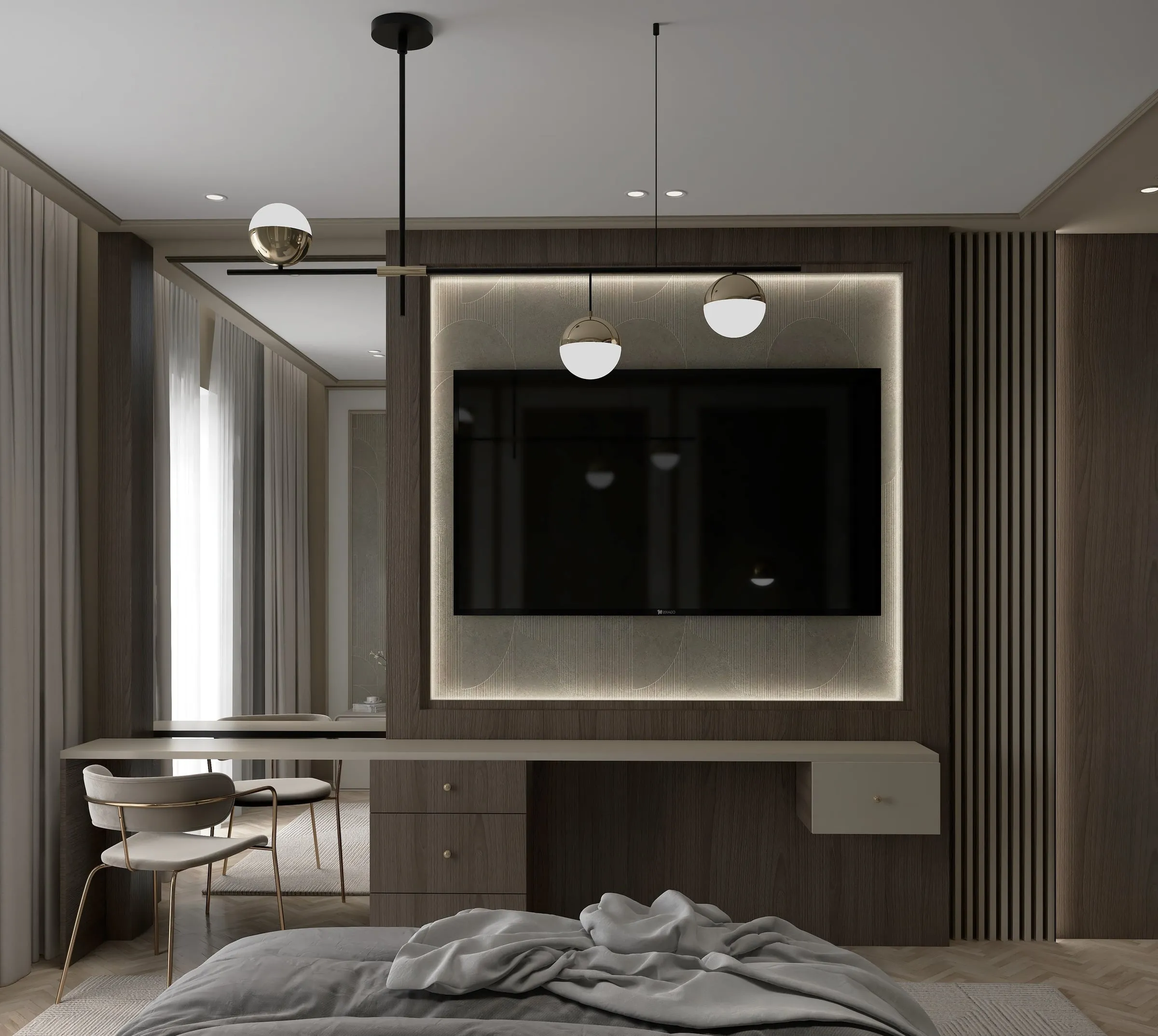
Choosing curtains and drapes looks, at first glance, like a matter of colour and taste. In reality, window textiles are instruments: they control light, insulate against heat and noise, and can visually reshape a room — a ceiling that reads taller, a window that reads more generous.
To land on a choice you won’t regret after the first summer, this guide moves in three steps: the questions that clarify what you actually need, the hanging rules that make the difference, and a tour of the materials — from voile to blackout.
The five questions to ask before choosing anything
1. What job does it need to do?
- Daytime privacy without giving up the light? Look at a sheer in voile, batiste or a linen blend.
- Complete darkness for sleep? In a bedroom, the answer is a drape in blackout fabric — 100% opacity.
- A room with large south- or west-facing windows that overheats? A dense velvet drape, or one with a thermal lining, reflects heat in summer and keeps it indoors in winter.
2. How much time will you give to upkeep?
- Want to machine-wash them at home and hang them back on the track nearly wrinkle-free? Choose technical blends — linen-polyester or cotton-polyester.
- Happy to take them to a professional cleaner now and then? Then the noble, more demanding materials open up: pure linen, silk or cotton velvet.
3. Who else lives in the house?
If you have cats or dogs, avoid open-weave linen, etamine and any mesh- or wool-type fabric — claws catch and ruin them quickly. Go for smooth, dense surfaces instead: dimout, short-pile velvet, tightly woven batiste.
4. What spatial problem are you solving?
- A large space with lots of hardwood and bare walls, where sound echoes? A heavy drape — matte velvet or a dense woven cloth — works as acoustic absorption.
- A small or dimly lit room? Skip the massive, dark drapes. Fluid sheers in light tones — ivory, off-white, cream — let through as much light as possible.
5. How do you want the folds to fall?
- Perfectly ordered, even, symmetrical folds, hotel-style? You’ll want a track with a Wave system — continuous, disciplined ripples.
- A relaxed, bohemian or rustic look? Classic pencil-pleat gathering, or a linen left to fall organically to the floor, gives you exactly that nonchalance.
The three golden rules of hanging
Mount high: ceiling to floor
Don’t fix the track or rod just above the window. The track belongs on the ceiling — or hidden in a recess — with the fabric dropping to within a centimetre of the floor, or just touching it. This single decision visually raises the walls of a room by 20–30 centimetres. It’s the first thing we draw on a new project, and almost always the one that surprises clients most.
Don’t economise on fullness
The generosity of the fabric is what makes a window look properly dressed. The general rule: a fullness ratio of 1:2 to 1:2.5. For a window two metres wide, you buy four to five linear metres of fabric — only then do the waves gain real depth.
Choose the colour against your walls and floor
In a living room, curtains and drapes should sit in soft chromatic harmony with the rest of the space — tone-on-tone with the walls or the rug — so they don’t fragment it. And a frequent trap: don’t pick optic, clinical white if the room has warm walls, wooden floors or cream rugs. Go for off-white, ivory or a light greige instead.
Sheer curtain materials
The sheer filters the light and dresses the window during the day. Here are the materials you’ll meet most often, and where each one performs at its best.
Linen-polyester blend (20–30% linen)
- Hand feel: organic, raw, slightly irregular, with visible texture and a semi-matte finish.
- In practice: doesn’t shrink, doesn’t crease aggressively, machine-washes at 30°C and holds its shape.
- Worth knowing: visually almost identical to pure linen, but not quite its full tactile authenticity.
- Where it works: the most versatile blend, and honestly the one we reach for most often — Japandi and Wabi-Sabi interiors, and relaxed modern spaces.
Cotton-polyester
- Hand feel: smooth, uniform, fine surface, fully matte.
- In practice: extremely precise folds on a Wave system, easy to iron, doesn’t shrink, good UV resistance.
- Worth knowing: less textured than linen — in a rustic setting it can read a touch “too tidy”.
- Where it works: architectural living rooms, modern apartments, offices — anywhere a symmetrical, impeccable line is wanted.
Batiste or technical voile (high-quality 100% polyester)
- Hand feel: fluid, airy, extremely fine and light, with a matte or semi-matte finish.
- In practice: falls in one continuous veil, like luminous mist; lasts for years; needs no ironing if hung damp.
- Worth knowing: it is synthetic — cheap versions can carry a plasticky sheen that spoils the whole effect.
- Where it works: minimalist schemes and large windows where the view should stay as open as possible.
Pure linen
- Hand feel: noble, richly textured; soft folds that fall organically and at ease.
- In practice: natural and breathable, filtering light in a warm, unmistakable way.
- Worth knowing: shrinks heavily — up to 5–10% — creases instantly and can bake in strong sun, drying out and turning brittle.
- Where it works: holiday homes, Mediterranean villas and interiors that embrace imperfection — with professional cleaning only.
Etamine and wool-look weaves
- Hand feel: a wider, open weave — soft and plush, reminiscent of fine knitwear.
- In practice: better acoustic insulation than a classic voile, and exceptional tactile warmth.
- Worth knowing: the open loops snag easily on pet claws and jewellery.
- Where it works: spaces with cold finishes — lots of glass, microcement, tile — that need acoustic comfort and warmth.
Organza silk (natural or synthetic)
- Hand feel: glossy or pearlescent; translucent yet rigid, crisp to the touch.
- In practice: creates sculptural, straight folds with a genuinely precious presence.
- Worth knowing: doesn’t fall fluidly, creases are hard to recover, it’s fragile and strictly dry-clean.
- Where it works: classic salons, glamour interiors, tall ceilings — wherever the sheer is a piece of art rather than a backdrop.
Drapery materials
The drape brings the weight: it governs opacity, temperature and acoustics. The percentages below show how much light each fabric blocks.
Matte velvet (cotton or polyester)
- Opacity: 70–85%, or 100% when lined.
- Fall: heavy and sculptural — a discreet opulence; it absorbs light rather than reflecting it.
- Care: an excellent acoustic and thermal insulator; the polyester version cleans easily with vacuuming and gentle washing.
- Where it works: large living rooms with echo, elegant master bedrooms, Quiet Luxury or contemporary-classic schemes.
Canvas or panama cloth (dense cotton-polyester)
- Opacity: 50–70%.
- Fall: architectural, with a visible dense-cloth texture and highly structured folds.
- Care: very durable, stands up to daily wear, machine-washes beautifully and irons easily.
- Where it works: modern or Scandinavian interiors, offices, rooms where the drape frames the window and delivers evening privacy.
Heavy washed linen
- Opacity: 40–60%.
- Fall: organic, heavy yet relaxed; often left to puddle 2–4 centimetres on the floor.
- Care: demanding — it needs pre-washing before sewing, or professional cleaning only.
- Where it works: Wabi-Sabi, Japandi and Mediterranean interiors — a relaxed, unostentatious kind of luxury.
Dimout
- Opacity: 70–85%.
- Fall: smooth, extremely uniform, matte finish, usually available in genuinely good neutrals.
- Care: very practical — it barely creases and has excellent UV resistance.
- Where it works: living rooms that need shielding from strong summer sun, guest rooms, bedrooms used during the day.
Technical blackout (three-layer weave or coated)
- Opacity: 100% — total darkness.
- Fall: stiffer, because of the black middle layer or the acrylic coating on the back.
- Care: the acrylic coating can’t take hot washes — it may crack; the woven version is more durable.
- Where it works: blackout curtains are essential in bedrooms, children’s rooms and screening rooms. A trick worth remembering: blackout can be used as a lining behind any other fabric.
Jacquard and brocade
- Opacity: 60–80%.
- Fall: a pattern woven in relief, often with lustrous threads; substantial weight and matching rigidity.
- Care: professional cleaning only; the raised threads can pull.
- Where it works: fully classic, historic, baroque or very specific eclectic interiors.
Before you buy: the home light test
However good a material sounds on paper, always ask for physical samples and look at them at home, in your room’s natural light, at different hours of the day. Showroom light is nothing like the light in your home — a shade that looked perfect on the shelf can read completely differently on your own wall. In the way we work, the fabric is chosen after we understand the room’s light, never before — whether that’s refreshing a single room or a complete project.
Let's talk about your space.
A free 30-minute consultation, no strings attached. Tell us what you'd like to change and we'll tell you how we'd approach it.
Book a consultation